

Portrait montage of cryptocurrency developers and advocates featured by Crypto Prisoners

Free the Crypto Prisoners

The war on crypto is over. It’s time to bring our innovators home.

Their work built freedom. Their cases put it at risk.

Across the world, innovators who built the foundations of cryptocurrency are being prosecuted under outdated laws.

These “crypto prisoners of war” are visionaries punished not for harming anyone, but for creating tools of freedom and financial independence.

Their stories

Seven cases. One dangerous precedent for privacy, code, and voluntary exchange.

Roman Storm — Tornado Cash Developer

Roman Storm, co-founder of the Tornado Cash privacy protocol, was arrested for writing open-source software that enhanced financial privacy on Ethereum. He faces criminal charges for code he published — not for harming or defrauding anyone.

  • Tornado Cash is a tool, not a crime: millions used it for legal purposes including donations and privacy.
  • Roman has raised nearly $600,000 in crypto for his legal defense, with strong support from the crypto community.
  • His case could set a precedent criminalizing developers for code.

Why it matters

If Roman is convicted, no open-source developer is safe. Innovation itself will be on trial.
Read more →

Ian Freeman — Free Talk Live

Libertarian radio host and activist Ian Freeman was sentenced to prison for running a Bitcoin exchange that helped people opt out of the banking system.

  • He operated openly for years, helping thousands access cryptocurrency.
  • Despite no evidence of harm, prosecutors portrayed voluntary Bitcoin sales as money laundering.
  • He is serving an 8-year sentence for empowering people with financial freedom.

Why it matters

Ian’s case shows how peaceful activism and voluntary exchange can be criminalized when it challenges government control of money.

Read more →
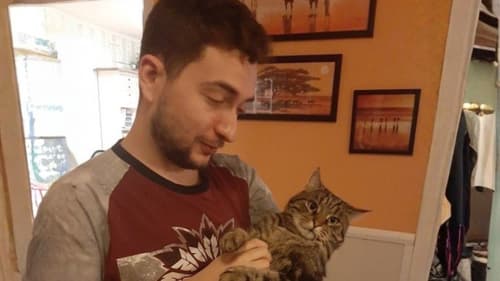
Roman Sterlingov holding a tabby cat at home

Roman Sterlingov — Bitcoin Fog

Roman Sterlingov, a Swedish-Russian citizen, has spent years behind bars accused of operating the Bitcoin Fog mixing service. Supporters describe him as a gentle, almost “Mr. Rogers-like” figure — yet he has been targeted as a criminal mastermind without direct evidence tying him to wrongdoing.

  • Prosecutors relied heavily on questionable blockchain forensics.
  • He has endured years of pre-trial detention, fighting for his life and reputation.
  • His supporters argue he is being scapegoated for technology itself.

Why it matters

Roman’s case highlights how governments weaponize blockchain analysis against individuals — while ignoring presumption of innocence.

Read more →

Samourai Wallet Founders (Keonne Rodriguez & William Hill)

The creators of Samourai Wallet, a privacy-focused Bitcoin wallet, were sentenced in 2025 and have now reported to federal prison.

  • Their "crime"? Building software that protects financial privacy.
  • Prosecutors argued their wallet facilitated money laundering, despite Samourai being a non-custodial tool.
  • Keonne Rodriguez received a 5-year prison sentence.

Why it matters

The prosecution of privacy software developers has alarmed civil liberties advocates and the crypto community alike. Many believe the outcome could have lasting implications for privacy tools and open-source development.

Read more →
Portrait of Nevin Shetty

Nevin Shetty

Former Fabric CFO Nevin Shetty was sentenced to prison after making a cryptocurrency investment that later collapsed.

  • His "crime"? Investing in crypto.
  • As CFO, he helped raise over $240 million and grow Fabric to a $1.5 billion valuation.
  • Nevin lost his own life savings in the same Terra Luna collapse.

Why it matters

Failed investments happen every day in business. Many supporters believe Nevin's prosecution sets a dangerous precedent for entrepreneurs, executives, and investors making good-faith decisions in emerging industries.

Read more →

Ray Youssef — NoOnes Founder

Ray Youssef, founder of NoOnes and co-founder of Paxful, was arrested in Mexico in February 2026 and brought to the United States to face federal charges tied to Paxful’s anti-money-laundering program and money-transmission rules. The case remains pending as he fights the allegations on pretrial release.

  • Ray built Paxful and later NoOnes to make peer-to-peer finance useful to people underserved by banks, particularly across the Global South.
  • Prosecutors allege that Paxful failed to maintain required compliance controls; these charges against Ray remain allegations, not a conviction.
  • He stepped away from NoOnes while defending the case and says the prosecution mistakes resistance to financial exclusion for criminal intent.

Why it matters

Ray’s case tests how far U.S. financial rules can reach entrepreneurs building global peer-to-peer markets—and whether expanding access outside traditional banking can be treated as evidence of wrongdoing.

Read Ray’s story →

Joby Weeks — Bitcoin Entrepreneur

Jobadiah Weeks, known as “Joby,” is a Bitcoin entrepreneur, adviser, and former BitClub Network promoter who pleaded guilty in 2020 to tax evasion and conspiracy to sell unregistered securities after eleven months in custody. Nearly six years later, he remains under restrictive home release without a sentence and is challenging the case pro se.

  • Joby says he joined BitClub sixteen months after launch, never owned or operated it, and helped procure real cryptocurrency-mining equipment.
  • His bid to withdraw the plea was denied in 2025; sentencing has been postponed repeatedly and no new date is currently listed.
  • In July 2026, prosecutors dismissed the indictment against BitClub’s alleged founder with prejudice, while Joby’s guilty plea and years-long restrictions remain unresolved.

Why it matters

Whatever one thinks of BitClub, years of court-ordered confinement without sentencing—and a harsher unresolved posture than the alleged founder now faces—raise serious questions about proportionality, finality, and equal treatment.

Read Joby’s case →

How You Can Help

Every action tells these builders—and the people deciding their futures—that they are not alone.

  1. Sign the Petition

    Add your name to show support for the release of all crypto prisoners.

  2. Donate

    Contribute to legal defense funds and advocacy efforts with crypto or fiat.

  3. Write Letters

    Send messages of support to prisoners and letters to policymakers demanding justice.

  4. Spread the Word

    Share their stories across social media and help raise global awareness.